

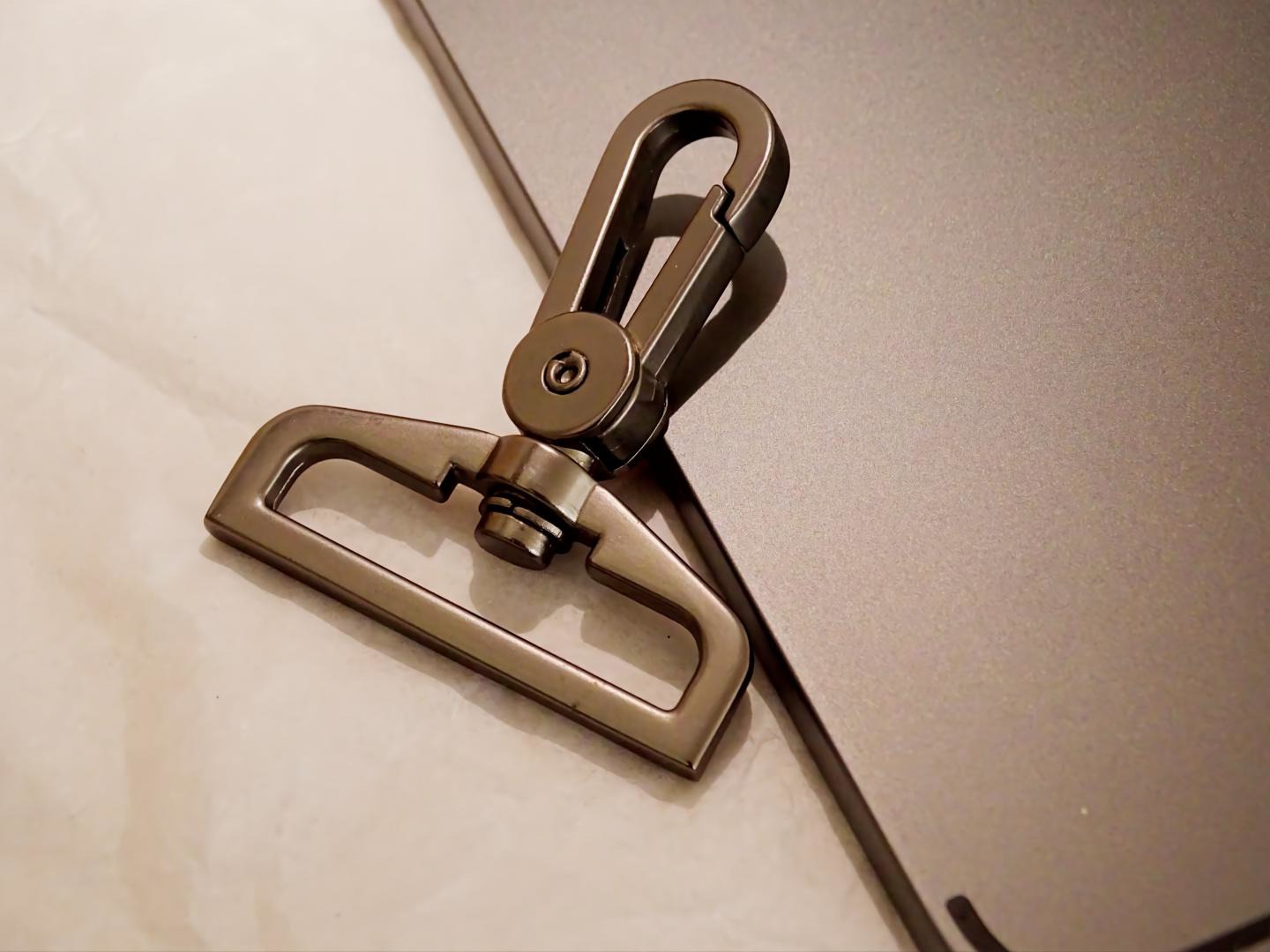
Stop letting cheap hardware compromise the quality of your finished products.
A handbag may feature premium leather, carefully selected materials, and beautiful craftsmanship. But one small hardware failure can ruin the entire product experience.
A broken snap hook, a jammed trigger, or a loose swivel connection can quickly turn into a customer complaint.
So, what separates a reliable, high-quality metal snap hook from one that is likely to fail?
Let’s take a closer look at four critical details that buyers should never overlook when sourcing custom bag hardware.
Understanding Snap Hook Anatomy
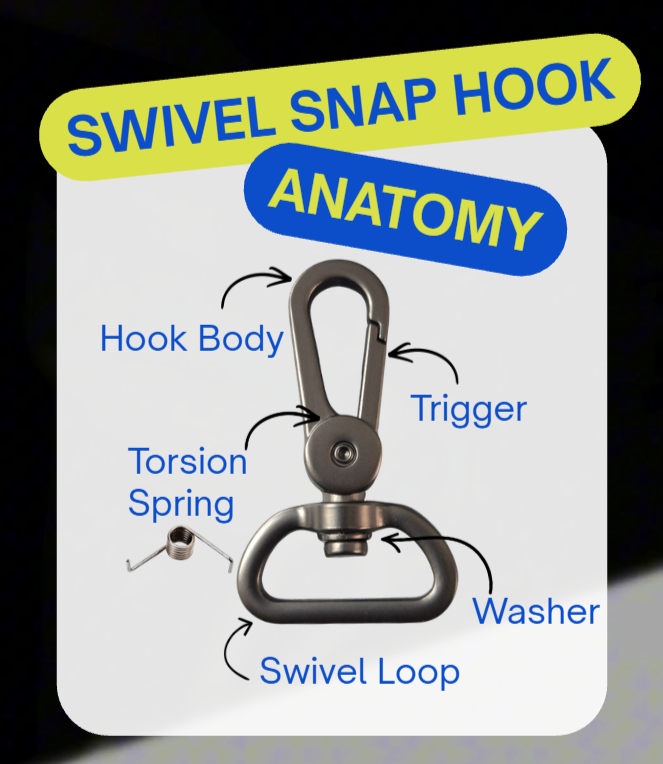
A typical swivel snap hook consists of five main components:
- Hook Body: The main structural component that carries the applied load.
- Trigger (Gate): The movable part that opens and closes the hook.
- Swivel Eye: The rotating connection that allows the hook to turn freely and prevents the attached strap from twisting.
- Washer: A small component positioned between the swivel assembly and hook body to reduce friction and control mechanical clearance.
- Torsion Spring: Provides the restoring force that returns the trigger to its closed position.
Although these components are relatively small, each plays an important role in the hook’s mechanical performance and service life.
Here are four details worth checking before approving your next hardware order.
#1 The Missing Washer: A Small Part with a Big Impact
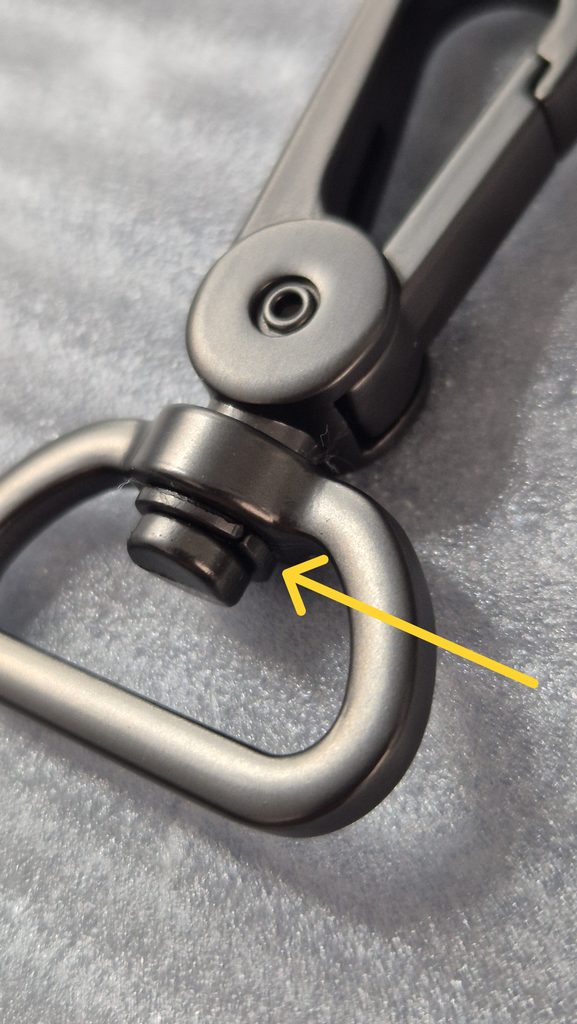
The washer is easy to overlook, but it plays an important role in the swivel mechanism.
It helps reduce direct metal-to-metal friction, controls clearance, and minimizes wear between moving components.
Without a properly designed washer, repeated rotation can increase friction, accelerate wear, and create excessive movement in the swivel assembly.
What should buyers check?
- Is the washer present and correctly positioned?
- Does the swivel rotate smoothly without excessive looseness?
- Is there noticeable wear after repeated rotation?
A small component can make a significant difference to long-term mechanical performance.
#2 Failure to Snap Back: The Spring and Trigger Mechanism
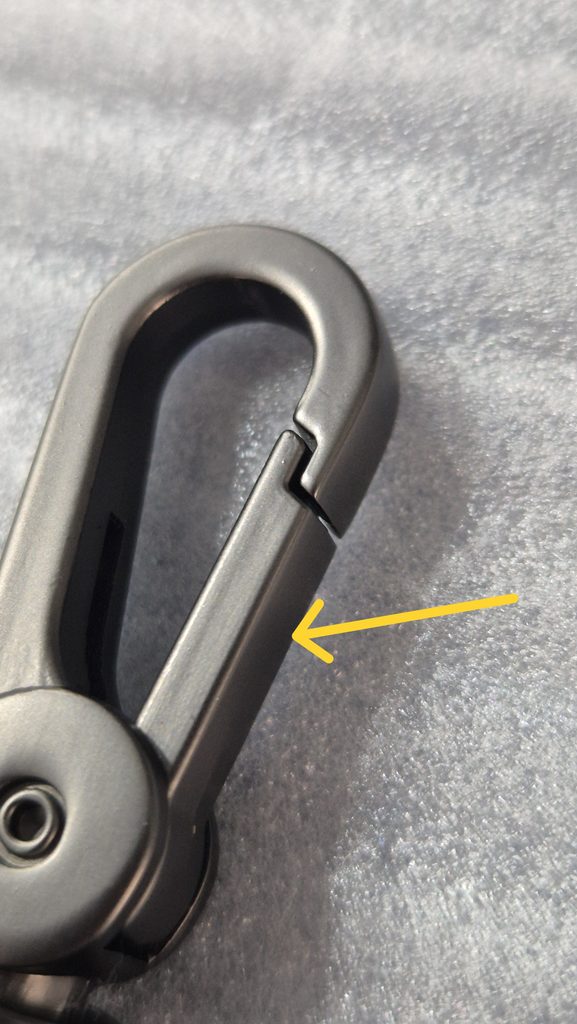
A reliable snap hook should open smoothly and return firmly to its closed position when the trigger is released.
This function depends on the coordination between the trigger geometry, torsion spring, pivot point, and assembly tolerances.
If the spring is too weak, incorrectly positioned, or poorly matched to the trigger mechanism, the gate may fail to close completely.
This creates a potential risk of accidental opening and detachment.
What should buyers check?
- Does the trigger return automatically after release?
- Does it close completely and consistently?
- Is the movement smooth, without sticking or excessive resistance?
- Does the mechanism continue working properly after repeated opening and closing cycles?
A simple functional test can reveal problems that are difficult to identify through visual inspection alone.
#3 Fragile Hook Body
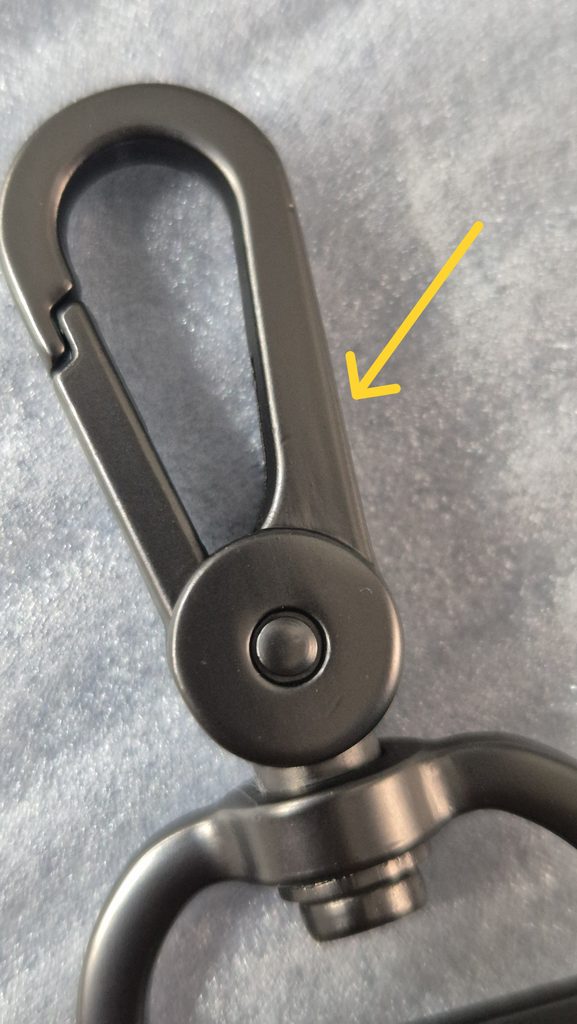
The hook body is the primary structural component of a snap hook.
Its strength depends on more than just its overall thickness. Material properties, cross-sectional geometry, casting quality, and structural design all influence its load-bearing performance.
For zinc alloy snap hooks, poor die-casting quality, internal porosity, insufficient material around critical sections, or sharp transitions in the design can create potential weak points.
Under repeated loading or excessive force, these areas may develop cracks or eventually fracture.
What should buyers check?
- Is the cross-section adequate for the intended application?
- Are there visible casting defects, cracks, or surface irregularities?
- Has the product undergone appropriate tensile or load testing?
Remember: A thicker hook is not automatically a stronger hook. Structural design and material quality matter just as much.
#4 Weak Swivel Eye: The Connection Point Matters
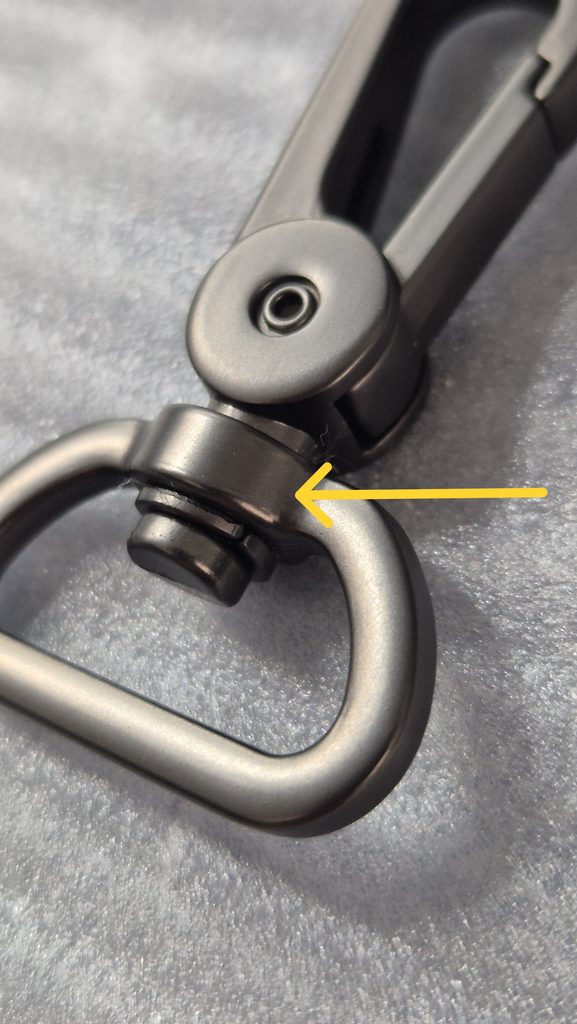
The swivel eye connects the hook to the bag strap or other attachment components.
Although it may look like a relatively simple loop, the connection area between the swivel eye and hook body can experience concentrated mechanical stress during use.
If the eye or its connecting section is inadequately designed, it may deform, crack, or separate under excessive loading.
The swivel mechanism should also rotate smoothly without excessive lateral movement or looseness.
What should buyers check?
- Is the swivel eye sufficiently robust for the intended application?
- Is the connection area free from visible cracks or casting defects?
- Does the swivel rotate smoothly without abnormal movement?
- Has the complete assembly been tested under the expected load conditions?
The strength of a snap hook depends on its weakest structural point, not simply its largest component.
How Do You Know If a Snap Hook Is Reliable?
Visual inspection is only the first step. For hardware used in functional applications, manufacturers should also consider mechanical testing.
Three useful inspection methods include:
- Tensile / Pull Testing: Evaluates how much force the assembled snap hook can withstand before deformation or failure.
- Cycle Testing: Repeatedly opens and closes the trigger to evaluate spring performance and mechanical durability.
- Swivel Testing: Checks rotational smoothness, clearance, and wear after repeated movement.
The appropriate test loads and acceptance criteria should be defined according to the product design and intended application. There is no universal load rating for all decorative bag hardware.
Is Your Bag Hardware Ready for Production?
A small hardware component can have a big impact on the quality and reputation of your finished product.
At JINGLOBAL, we understand that reliable hardware involves more than an attractive appearance. It requires proper structural design, material selection, manufacturing control, and functional testing.
We’re currently offering a FREE HARDWARE AUDIT.
Send us your existing hardware samples, and our team will help evaluate:
- Mechanical structure and potential weak points.
- Trigger and swivel functionality.
- Plating quality and surface defects.
- Overall manufacturing quality and structural integrity.
Get a professional second opinion before your next production run.
Because good hardware should do more than look good. It should work reliably, too.